
As if lab @ Schmiede26
Deutsch drunter
As-If Science Jam
When Science Becomes Play — and Suddenly Makes Sense
We live in a world saturated with data. Studies, statistics, models — they shape political decisions, public debates, and personal beliefs. And yet genuine data-based discourse rarely takes place. Instead, two extremes dominate: blind trust (“the study says…”) and reflexive rejection (“I don’t understand this”).
The As-If Science Jam intervenes precisely at this point.
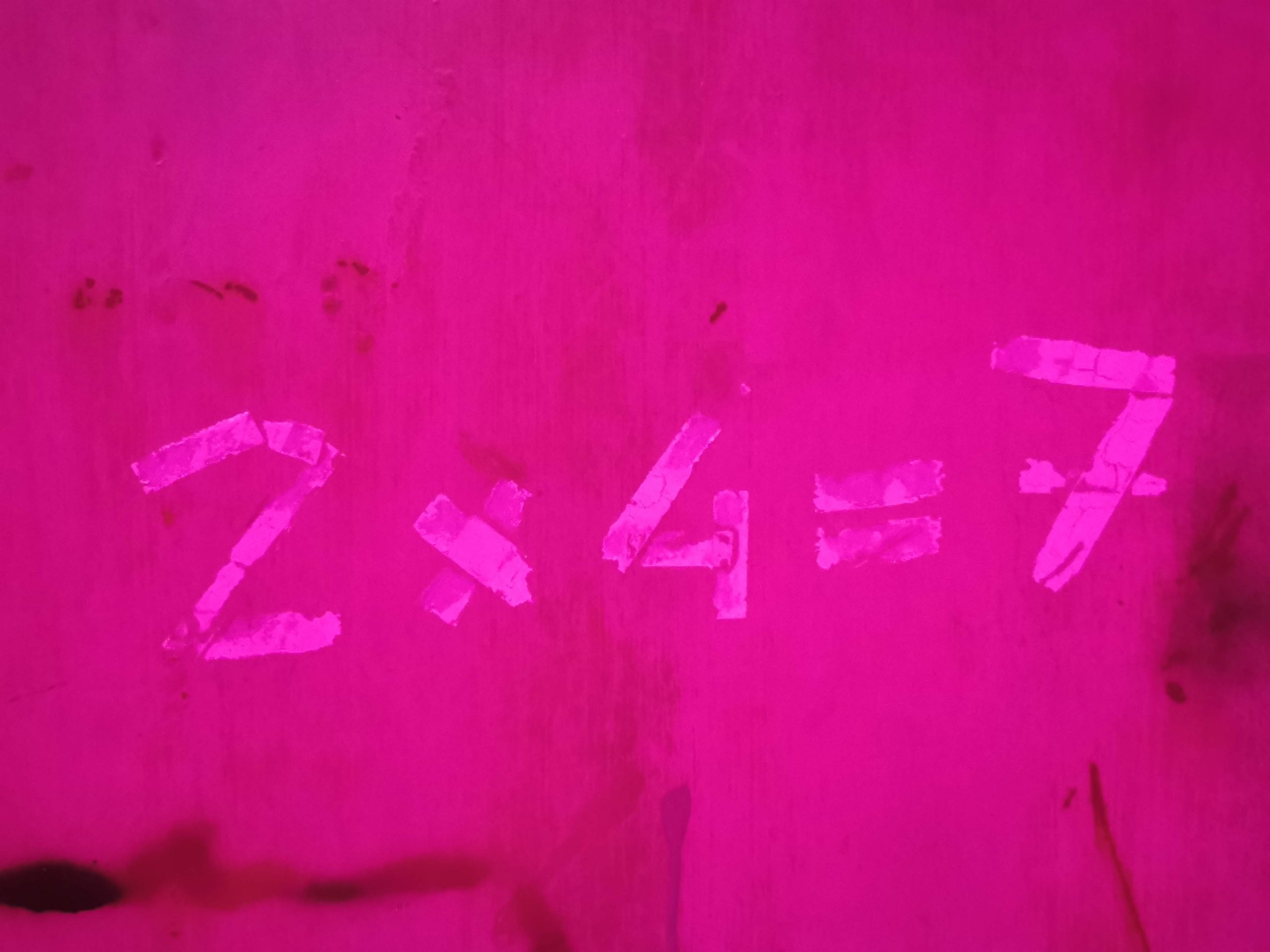
Developed by Michael Hackl for subnet, the format will be initiated at Schmiede Hallein in 2026. It deliberately turns the scientific process upside down. Teams work with real datasets and apply methods from statistics and data science, but with an unexpected goal: to “prove” the most absurd hypothesis as convincingly as possible.
What initially appears to be a game is, in fact, a precise intervention. Through deliberate exaggeration, simplification, and distortion, the mechanisms that also shape real-world research, media reporting, and politics become visible: selective data sampling, misleading visualizations, and statistical tricks.
In a multi-day process – from hypothesis generation to analysis and finally a public “Offensio/Defensio” – participants learn not only how to read data, but how to question it. The boundary between knowledge and interpretation is not explained theoretically, but experienced directly in practice.
The concept is carried by an interdisciplinary team around Michael Hackl, Erik Zepka, and Walter Fuchs, who combine art, science, and critical reflection. Their shared goal is to make data literacy accessible – not through simplification, but through experience.
The As-If Science Jam demonstrates that science is not merely a collection of correct answers, but a process shaped by decisions, interpretation, and responsibility. And that precisely through playful engagement with data, a new understanding can emerge: one that neither believes naively nor rejects prematurely.
Lab Leader Information
Michael Hackl: Systems philosopher and co-creator of Schmiede Hallein (recipient of the Austrian Art Prize 2016), Process & Innovation Engineer at Scinteco (pharmaceutical software). Works at the intersection of art, technology, and science. His improVerse vision revolves around verifiable scientific workflows. His philosophical project Asifism questions placebo effects, ritual, and the construction of meaning. Experienced facilitator of hackathons and experimental formats.
Erik Zepka: Conceptual media artist, curator, poet, scientist, educator, and theorist. Years of interdisciplinary laboratory work in immunology, pathology, environmental health, and chemistry have given him first-hand experience with institutional scientific practice. Co-founder of the Open Science Network in Vancouver — a laboratory for democratizing and rethinking scientific communication. His artistic work interrogates the cultural products of technoscience and has been exhibited at institutions including Tate Modern, the Whitney Museum, and ISEA.
Prof. Dr. Walter Fuchs: Professor of Criminology at HWR Berlin. Research focuses include hate crime, white-collar crime, migration and crime, and sociology of law. Explicit expertise in quantitative research methods and data visualization.
Deutsch:
As-If Science Jam
Wenn Wissenschaft zum Spiel wird — und plötzlich verständlich
Wir leben in einer Welt voller Daten. Studien, Statistiken, Modelle — sie strukturieren politische Entscheidungen, öffentliche Debatten und persönliche Überzeugungen. Und doch findet echter datenbasierter Diskurs kaum statt. Stattdessen dominieren zwei Extreme: blinde Gläubigkeit („die Studie sagt…“) und reflexhafte Abwehr („das verstehe ich nicht“).
Der As-If Science Jam setzt genau hier an.
Das von Michael Hackl für subnet entwickelte Format wird 2026 auf der Schmiede Hallein initiiert. Wir drehen den wissenschaftlichen Prozess bewusst auf den Kopf. Teams arbeiten mit echten Datensätzen, nutzen Methoden aus Statistik und Data Science, aber mit einem unerwarteten Ziel: die absurdeste Hypothese möglichst überzeugend zu „beweisen“.
Was zunächst wie ein Spiel wirkt, ist in Wahrheit eine präzise Intervention. Denn durch das gezielte Übertreiben, Verkürzen und Verfälschen werden jene Mechanismen sichtbar, die auch in realer Forschung, Medienberichterstattung und Politik wirksam sind: selektive Datenauswahl, irreführende Visualisierungen, statistische Tricks.
In einem mehrtägigen Format — von der Hypothesenbildung über die Analyse bis zur öffentlichen „Offensio/Defensio“ — lernen die Teilnehmenden, Daten nicht nur zu lesen, sondern zu hinterfragen. Die Grenze zwischen Erkenntnis und Interpretation wird dabei nicht theoretisch erklärt, sondern praktisch erfahrbar.
Getragen wird das Konzept von einem interdisziplinären Team rund um Michael Hackl, Erik Zepka und Walter Fuchs, die Kunst, Wissenschaft und kritische Reflexion miteinander verbinden. Ihr gemeinsames Ziel: Datenkompetenz zugänglich machen — nicht durch Vereinfachung, sondern durch Erfahrung.
Der As-If Science Jam zeigt, dass Wissenschaft nicht nur aus richtigen Antworten besteht, sondern aus Prozessen, Entscheidungen und Verantwortung. Und dass gerade im spielerischen Umgang mit Daten ein neues Verständnis entstehen kann: eines, das weder naiv glaubt noch vorschnell ablehnt.
Lableader Infos:
Michael Hackl: Systems Philosopher, Co-Gestalter der Schmiede Hallein (Österreichischer Kunstpreis 2016), Process & Innovation Engineer bei Scinteco (Pharma-Software). Arbeitet an der Schnittstelle Kunst/Technologie/Wissenschaft. Seine improVerse-Vision dreht sich um verifizierbare wissenschaftliche Workflows. Sein philosophisches Projekt “Asifism” hinterfragt Placebo-Effekte, Ritual und Bedeutungskonstruktion. Erfahrener Moderator von Hackathons und experimentellen Formaten.
Erik Zepka: Konzeptueller Medienkünstler, Kurator, Poet, Wissenschaftler, Educator und Theoretiker. Jahre interdisziplinärer Laborarbeit (Immunologie, Pathologie, Umweltgesundheit, Chemie) — Erfahrung mit institutioneller Wissenschaftspraxis von innen. Mitbegründer des [Open Science Network](https://www.erikzepka.com/about.html) in Vancouver — ein Labor zur Demokratisierung und Neudenken wissenschaftlicher Kommunikation. Kunst hinterfragt die kulturellen Produkte von Technoscience — ausgestellt u.a. in Tate Modern, Whitney Museum, [ISEA]
Prof. Dr. Walter Fuchs: Professor für Kriminologie an der HWR Berlin. Forschungsschwerpunkte: Hasskriminalität, White-Collar-Crime, Migration & Kriminalität, Rechtssoziologie. Explizite Expertise in quantitativen Forschungsmethoden und Datenvisualisierung.
—
Schmiede26: Ai Ai Ai
SEP16 – 26 2026
Apply till MAY31
and we got three open calls we would like to bring to your attention.
AkademieAIR 2026 Call is open, till MAY31
subnetAIR 2027 Call is open till JUN15